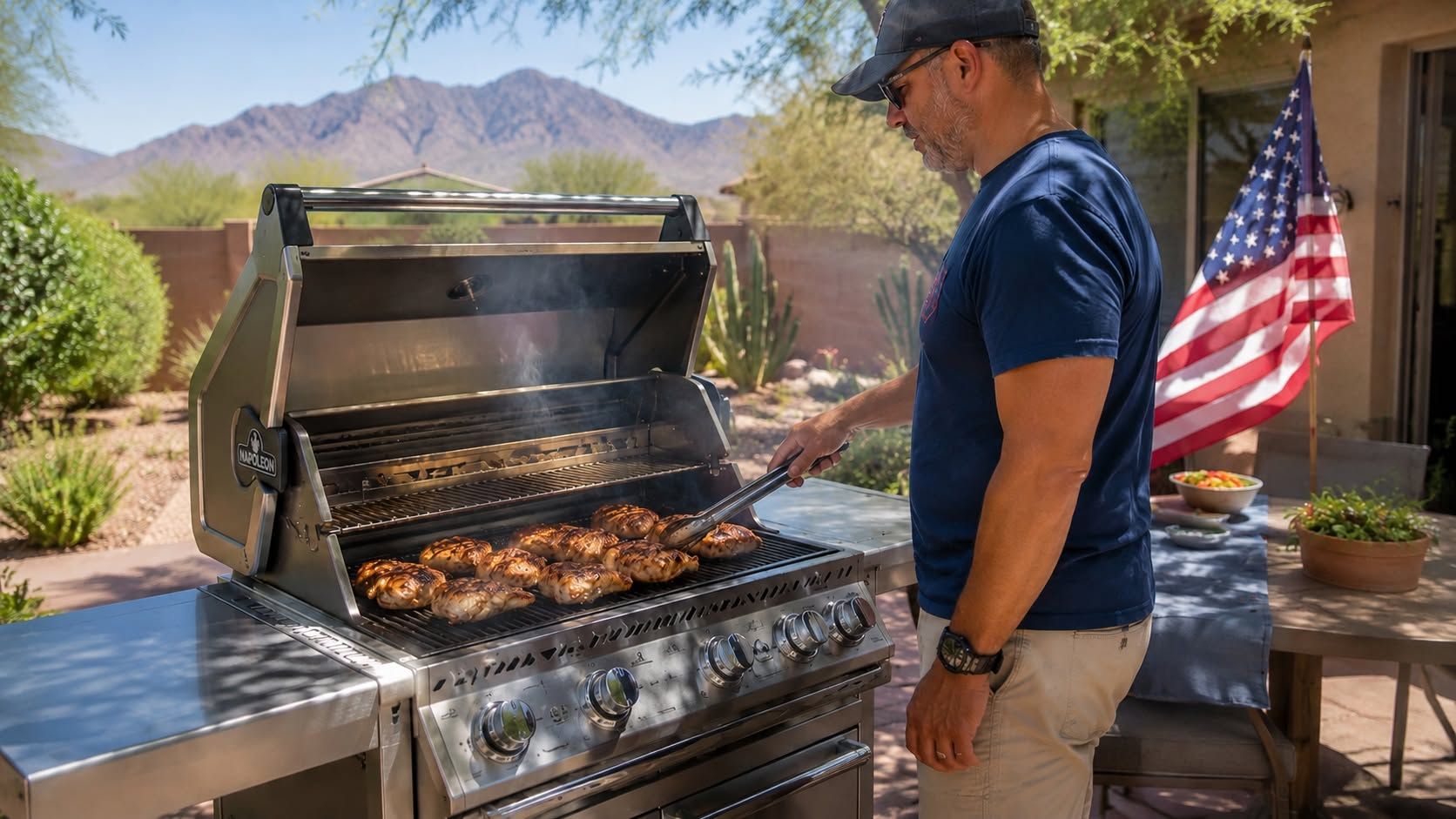
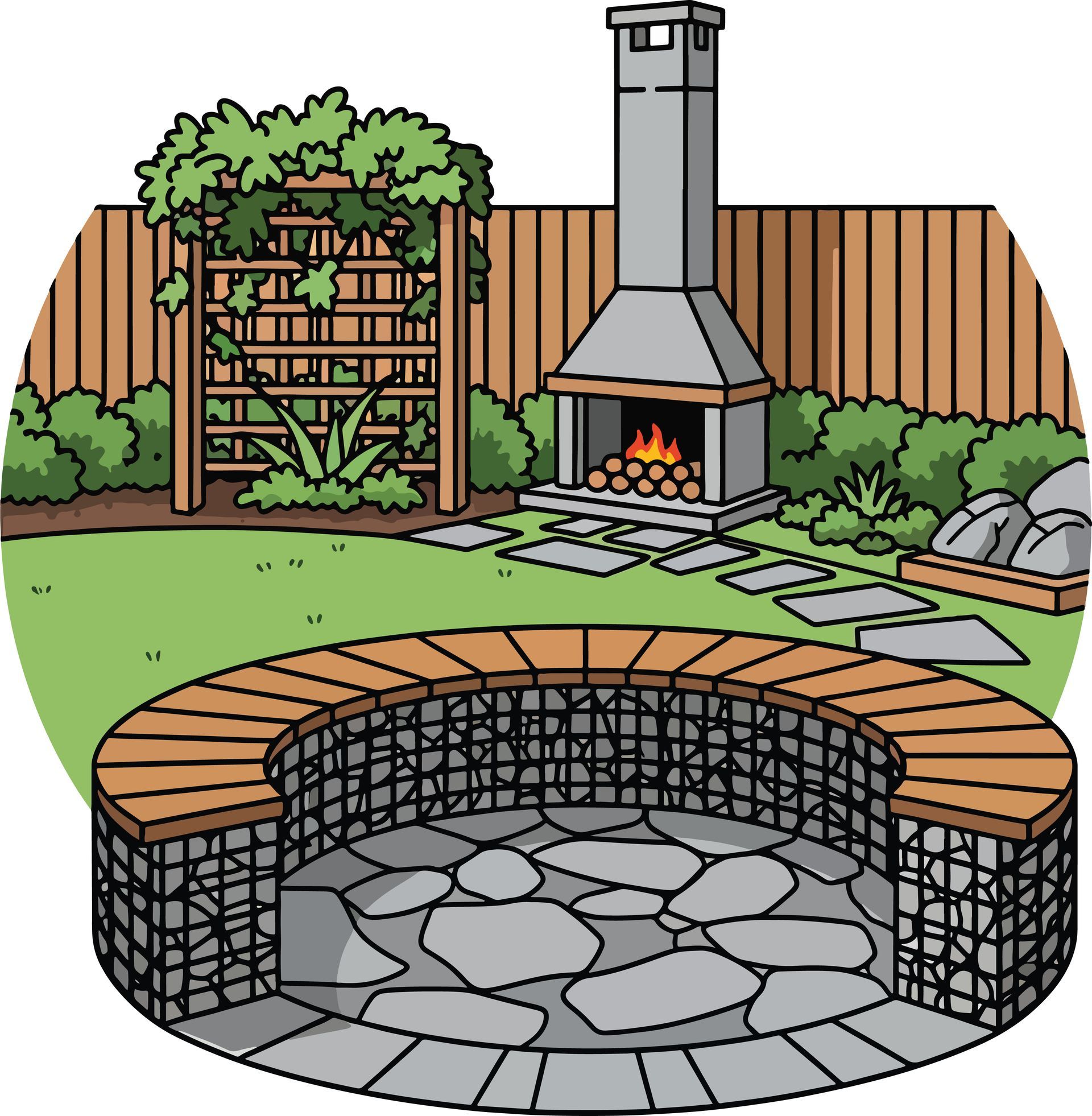
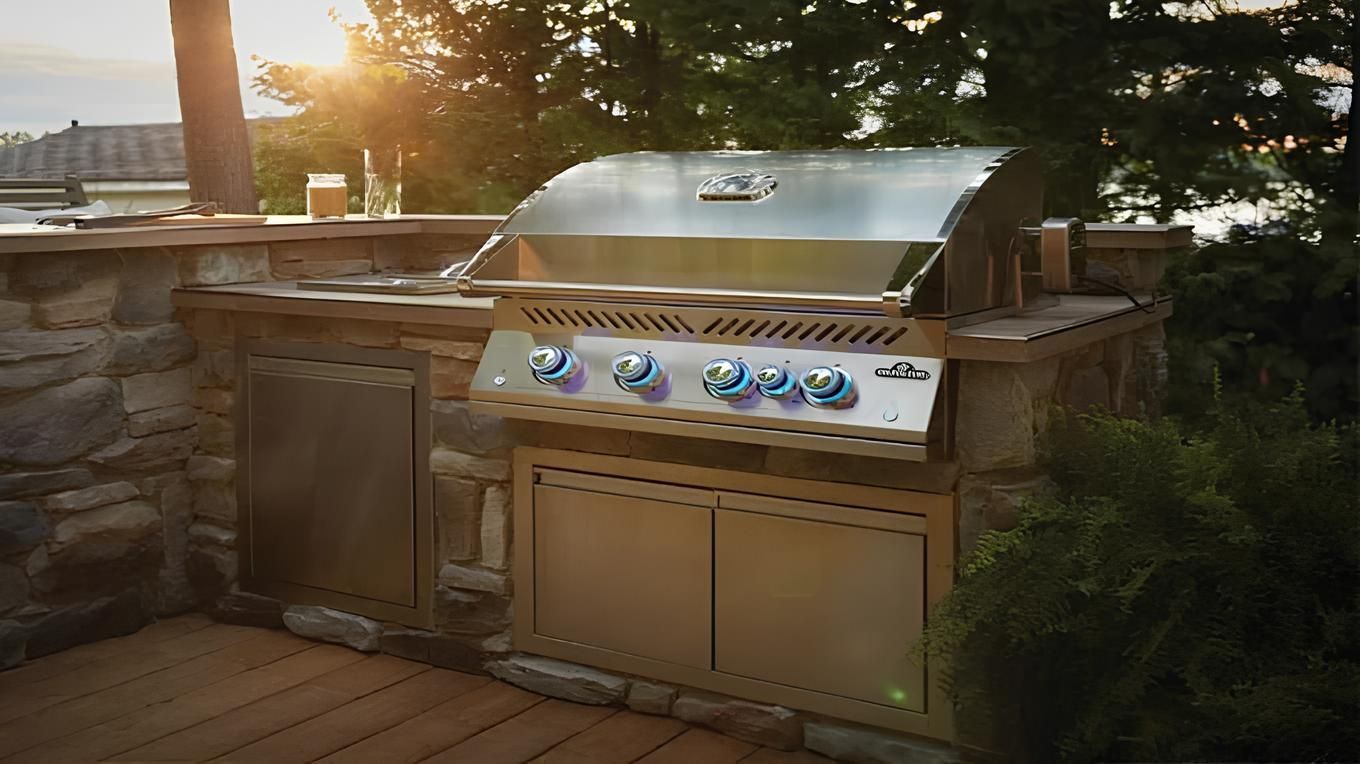
Choosing the right patio materials for a BBQ grill patio setup in Southern Arizona is one of the most important decisions a Tucson homeowner can make. Summer temperatures regularly climb past 110 degrees Fahrenheit, UV exposure is intense, monsoon moisture arrives fast and departs quickly, and caliche soil means ground movement is a real concern. The wrong material can crack, fade, or corrode within a single season. The right one can last for decades.
Why Arizona's Desert Climate Demands Specific Patio Materials
Tucson sits in the Sonoran Desert at roughly 2,400 feet of elevation, which means intense solar radiation year-round. Daytime surface temperatures on an unshaded concrete slab can reach 160 degrees during July. Then monsoon season arrives, bringing rapid temperature drops and sudden moisture. Materials that expand and contract at different rates, or that absorb water easily, are likely to crack or degrade ahead of schedule.
For any BBQ grill patio setup in this region, every material choice should be rated for both extreme heat and intermittent moisture.
Best Countertop Materials for a Desert BBQ Island
Granite
Granite handles high heat without warping and resists UV fading well. Natural stone can absorb moisture, so proper sealing is important before and after monsoon season. Granite pairs well with stucco and block construction and adds a premium look to any BBQ grill patio setup.
Concrete
Poured or precast concrete is durable and can be custom-formed to fit any island shape. Minor surface cracks can develop over time from thermal expansion, but a penetrating sealer applied annually minimizes this. Concrete handles the weight of built-in grills well and is often more budget-accessible than natural stone.
Porcelain or Ceramic Tile
Outdoor-rated tile does not absorb heat the way darker stone does. Choose tile with a high frost and heat rating, and seal grout lines to prevent monsoon water intrusion. Larger-format tiles with minimal grout lines perform better over time and are easy to clean after a heavy cook session.
Flooring That Handles Tucson's Intense Heat
Concrete pavers in lighter tones are widely used across Tucson because they reflect heat rather than absorbing it. Large-format flagstone, particularly Arizona sandstone, performs well and blends naturally with the desert landscape. Avoid dark-colored stone on unshaded surfaces, as temperatures can become uncomfortable for bare feet during peak summer hours.
Travertine is popular in Southern Arizona for its heat-resistant properties and natural thermal comfort underfoot. Tumbled travertine offers a slip-resistant texture that helps during wet monsoon evenings. Porcelain pavers rated for outdoor use resist staining from grease and food spills, making them practical for an active BBQ area.
Cabinetry and Frame Materials for Outdoor Kitchens
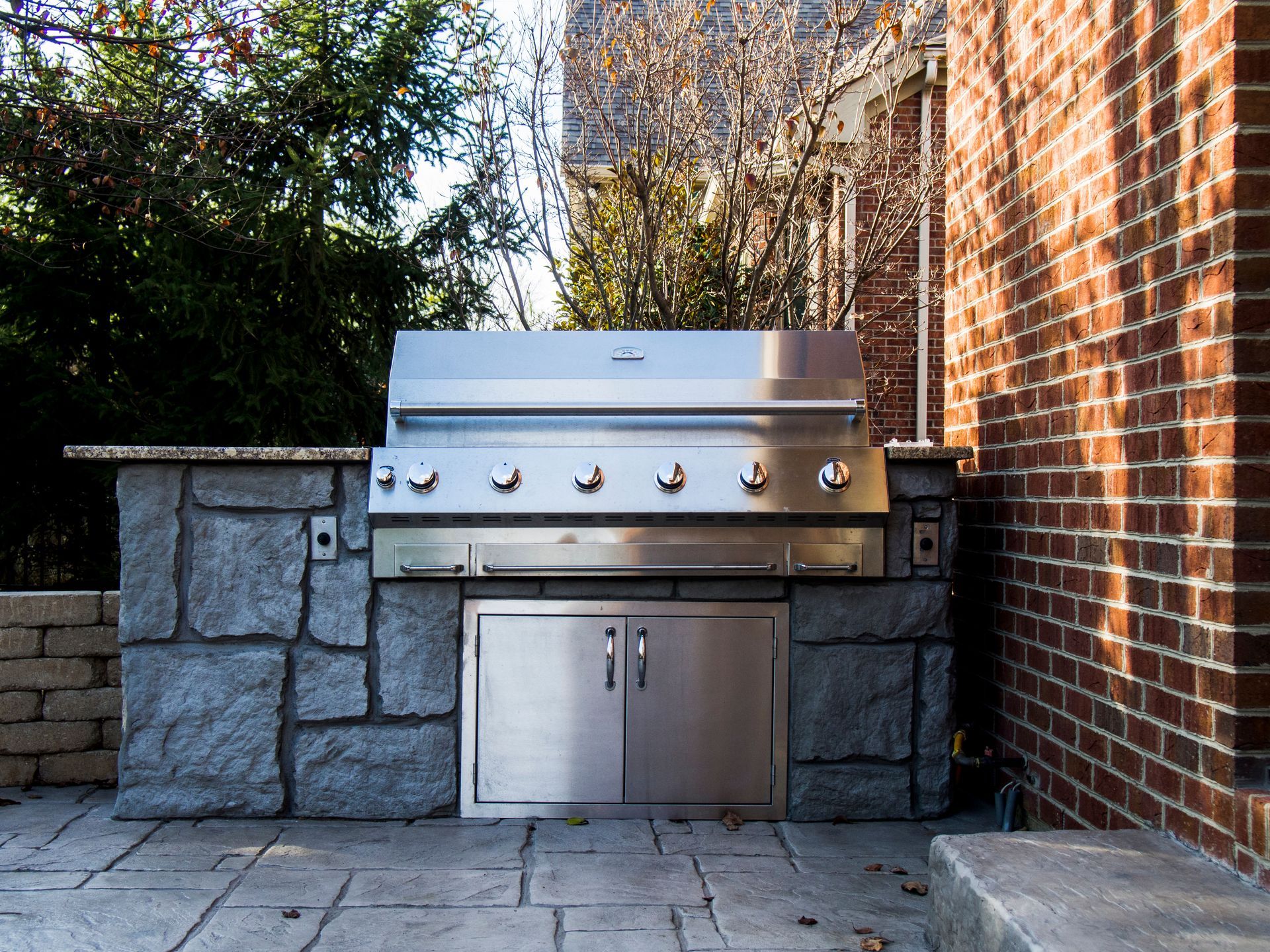
The structural frame around your BBQ grill patio setup matters as much as the surface finishes. Steel-framed islands with stainless steel door and drawer systems outperform wood-framed alternatives. Wood can warp, crack, and attract pests in desert conditions, particularly after monsoon seasons. Stainless steel resists rust, handles temperature swings, and requires far less maintenance.
Concrete block remains a proven framing method for outdoor kitchen islands throughout Southern Arizona. It provides a solid, heat-resistant base that can be faced with stone veneer, stucco, or tile for a custom finish.
Materials to Avoid in Southern Arizona
Untreated wood decking and cabinetry absorb moisture during monsoon season and then dry out rapidly in the heat, causing splitting and warping. Standard indoor tile may not be rated for the thermal expansion Tucson summers demand and can crack at grout lines. Iron hardware without a protective coating will rust after monsoon exposure. Always confirm that any material carries an outdoor rating before committing to it.
Maintenance Tips for Desert Patio Materials
Stone and concrete countertops should be resealed twice a year, ideally in spring before heat peaks and again after monsoon season ends. Stainless steel surfaces benefit from a food-grade polish applied every few months. Tile grout lines should be inspected and resealed annually. A shade structure over your BBQ island also dramatically reduces UV degradation across all surfaces.
How Often Should I Seal Outdoor Countertops in Arizona?
Twice per year is generally recommended. Tucson's UV exposure and monsoon moisture cycle break down sealers faster than in milder climates. A simple water bead test tells you when resealing is due: if water no longer beads on the surface, it is time to reapply.
Is Travertine a Good Choice for a Tucson Patio?
Travertine works well when properly sealed and installed with outdoor-rated materials. Filled and honed travertine tiles tend to be more practical for high-use BBQ areas than unfilled varieties. Consult a local outdoor living specialist to confirm the right finish for your layout.
What Frame Material Works Best for a Desert BBQ Island?
Steel-framed construction with stainless steel components is often the most durable choice. Concrete block is a proven alternative that holds up well to desert temperature swings. Both options outperform wood framing across Tucson's monsoon and summer heat cycles.
Ready to Build Your Ideal Outdoor BBQ Space in Tucson?
Getting the materials right is the first step toward a BBQ grill patio setup that holds up year after year. Earth Energy's Hearth & Patio has been helping Tucson homeowners design durable outdoor living spaces for decades. From
BBQ grill installation and outdoor kitchen islands to full
outdoor living product selection, the team can match you with materials suited to the Sonoran Desert. Call
(520) 888-8867 to request a consultation, or
contact the team online to get started. You can also explore reviews at
Earth Energy's Hearth & Patio on Google.